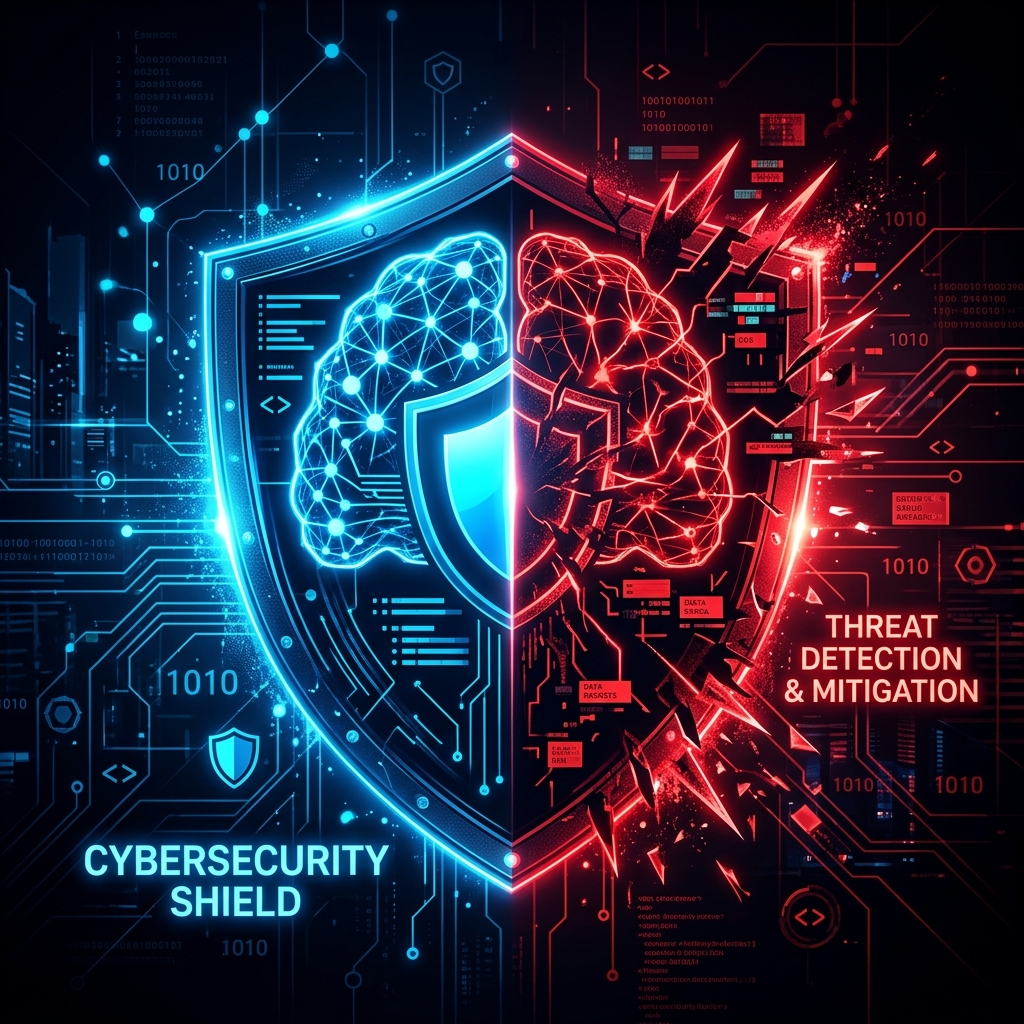
AI in Cybersecurity: Threat or Opportunity?
In 2025, an AI-generated phishing email bypassed every traditional spam filter at a Fortune 500 company. It was perfectly written, contextually aware, and personalized to each recipient using scraped LinkedIn data. Forty-seven employees clicked.
Welcome to the new era of cybersecurity, where the biggest threat and the best defense share the same DNA: artificial intelligence.
The Attacker's New Best Friend
AI has democratized hacking in ways we didn't anticipate. Large language models can generate sophisticated phishing campaigns in seconds. AI-powered tools can analyze code repositories for vulnerabilities faster than any human team. Deepfake technology makes voice-based social engineering terrifyingly convincing.
The barrier to entry for cyberattacks has dropped dramatically. You no longer need years of experience to launch a sophisticated attack. You need a prompt.
The Defender's Secret Weapon
But here's the flip side — and it's significant. AI-powered security systems can analyze millions of events per second, detecting anomalies that would take human analysts hours to spot. Machine learning models can predict attack patterns before they materialize. Automated response systems can contain threats in milliseconds.
SIEM platforms enhanced with AI are transforming Security Operations Centers. Instead of drowning in false positives, analysts get prioritized, contextualized alerts. AI handles the noise; humans handle the nuance.
The Arms Race
What we're witnessing isn't just a technological shift — it's an arms race. Every defensive AI advancement is met with an offensive counter. AI detects anomalous network traffic? Attackers train AI to generate traffic patterns that look normal. AI catches phishing emails? Attackers use AI to write emails that bypass detection.
The winner of this race won't be determined by who has better technology. It'll be determined by who has better strategy.
Where We Go From Here
The cybersecurity professionals who will thrive in this AI-driven landscape are those who understand both sides. You need to know how AI can be weaponized so you can defend against it. You need to leverage AI tools without becoming dependent on them.
AI isn't replacing cybersecurity professionals. It's raising the bar for what it means to be one. The fundamentals — critical thinking, understanding systems, recognizing patterns — are more important than ever. AI amplifies human capability. It doesn't replace human judgment.
The real threat isn't AI. It's ignoring AI.